
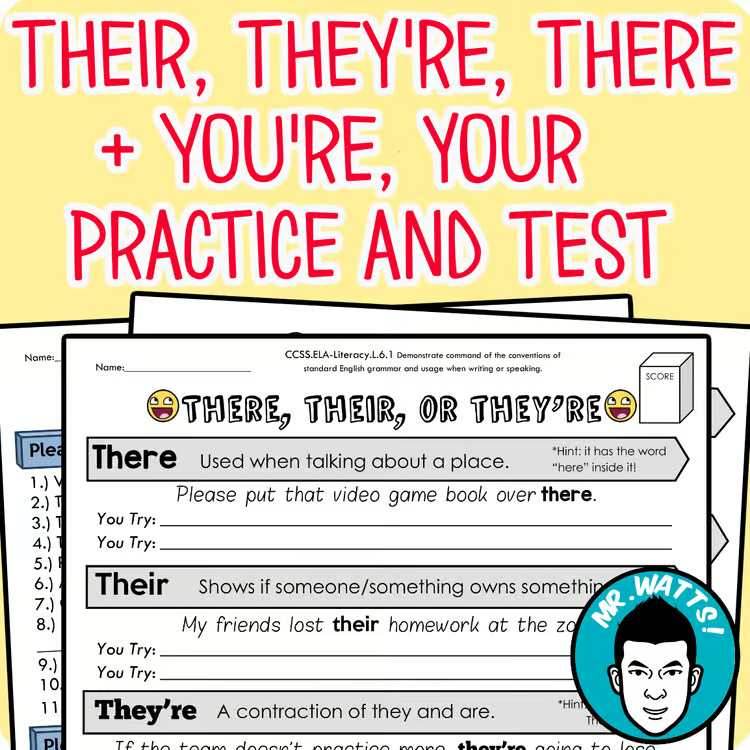
One of the most common challenges for students (and many adults!) is mastering the use of homophones. These words sound the same but have vastly different meanings and spellings. Specifically, the mix-ups between there/their/they’re and your/you’re are frequent hurdles in achieving the CCSS.ELA-Literacy.L.6.1 standard, which requires demonstrating command of standard English grammar and usage.
Using targeted practice worksheets is an effective way to help students distinguish these terms. Below is a breakdown of the core rules and strategies used to teach these essential conventions.
1. The Trio: There, Their, and They’re
Understanding the difference between these three words requires looking at their function in a sentence: place, possession, or contraction.
There: Location and Place
“There” is used when talking about a specific place or position.
- A Helpful Hint: The word “there” actually has the word “here” inside it to remind you it refers to a place.
- Example: “Please put that video game book over there.
Their: Ownership and Possession
“Their” shows that someone or something owns something.
- Example: “My friends lost their homework at the zoo”
- Example: “The soldiers ate their spaghetti and went to sleep”
They’re: The Contraction
“They’re” is simply a contraction of the two words “they” and “are”
- Example: “If the team doesn’t practice more, they’re going to lose”
- Check: If you can replace the word with “they are” and it still makes sense, use “they’re”
2. The Duo: Your vs. You’re
Mistaking “your” for “you’re” is one of the most common errors in digital writing. Here is how to keep them straight.
Your: Possession
“Your” shows ownership11111111.+1
- A Pro-Tip: Try replacing “your” with the word “my.” If the sentence still makes sense, then “your” is likely correct
- Example: “Where do you keep all of your homework?”
You’re: The Contraction
“You’re” is the shortened version of “you” and “are”
- Example: “Even though we just met, you’re already my best friend”
- Example: “I didn’t know that you’re going to bring your dog too”
Homophone Quick Reference Table
| Word | Function | Quick Test |
| There | Place/Location | Does it contain “here”? |
| Their | Possession/Owner | Does it show someone owns something? |
| They’re | Contraction | Can you say “they are”? |
| Your | Possession/Owner | Can you replace it with “my”? |
| You’re | Contraction | Can you say “you are”? |
Putting it Into Practice
To help students truly “command” these conventions, they must move beyond simple definitions to active identification22. Effective grammar curriculum involves three stages:
- Fill-in-the-Blanks: Forcing students to choose the correct word for a specific context, such as “Take a left at the bookstore near there“
- Error Detection: Identifying when a word is used incorrectly. For example, recognizing that “We went to you’re wedding” is wrong and should be “your”
- Comprehensive Testing: Using mixed-format tests that combine all five homophones to ensure the student can distinguish between them simultaneously
Teacher Tip: Encourage students to read their sentences aloud using the “full words” for contractions. If a student says, “I think you are not going to get to the lunchroom in time,” they will immediately know to use “you’re” instead of “your”
Mastering these homophones takes time and repetition, but with these hints and structured practice, students can gain the confidence they need for standard English usage.


Leave a Reply