
One of the most significant shifts in middle school ELA is moving students away from simple plot summaries and toward deep, thematic analysis. We have all seen it: you ask a student for the theme of a story, and they respond with a play-by-play of the ending. The transition from “what happened” to “what it means” is a cognitive leap that requires both practice and the right tools to bridge the gap.
As educators, our goal is to help students realize that the story is merely the vehicle for a larger message. When they can identify a theme, they aren’t just reading—they are decoding the author’s intent and connecting with universal human experiences.
The Foundation: Defining Theme
The first step in mastering this skill is providing a clear, consistent definition. Theme isn’t just a “topic”—it is the message or lesson the author wants the reader to take away from the story.
To support this in the classroom, a visual aid can be incredibly effective. A simple, bold classroom poster that defines theme as the “Author’s Message” serves as a constant anchor during reading discussions, helping students filter out the noise of the plot and focus on the underlying lesson.
High-Interest Stories for Modern Learners
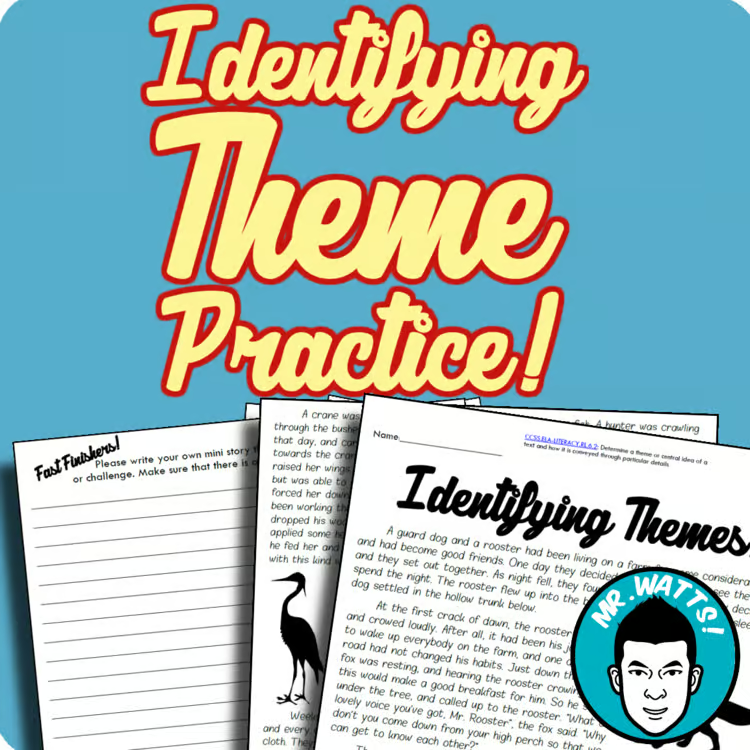
Engagement is the key to analysis. Students are far more likely to think critically when they care about the subject matter. This 11-page worksheet pack utilizes a diverse range of stories to keep interest high:
- Modern Resilience: A story about Michael Jordan and the power of perseverance helps students see themes in a contemporary context they recognize.
- Consequences and Character: Narratives exploring the fallout of procrastination or the difference between hard work and unearned wealth provide clear, relatable moral dilemmas.
- Classic Fables: Longer, engaging narratives featuring characters like the clever Rooster and Fox, the selfish Pig and Dog, or the disloyal Hyena offer traditional structures where the theme is impactful and clearly defined.
The Power of “Why”: Structured Analysis
Identifying a theme is only half the battle; the real mastery comes in the justification. According to CCSS.ELA-LITERACY.RL.6.2, students must be able to determine a theme and support it with textual evidence.
In this pack, every story is followed by a structured prompt that asks two vital questions:
- What is the theme?
- What is your reasoning?
By requiring students to provide their reasoning, you are training them to look back at the text for clues. They learn that their answer is only as strong as the evidence they can find to support it. This structured approach builds the “detective” mindset necessary for high-level literary analysis.
Creative Application for Fast Finishers
We know that students work at different paces, and “fast finishers” need opportunities that extend their learning rather than just filling their time. Two dedicated pages in this packet encourage students to shift from being “readers of themes” to “creators of themes.”
By writing their own mini-stories with a clear, intended lesson, students demonstrate a full-circle understanding of how authors weave messages into their work. When a student can successfully construct a narrative around a theme like “honesty is the best policy,” they have truly mastered the concept.
Elevate Your Literacy Instruction
By providing your students with a mix of modern stories, classic fables, and structured analysis, you are giving them the tools they need to navigate complex texts with confidence. They move beyond the surface of the plot and begin to see the deeper architecture of everything they read.


Leave a Reply