
Moving students from passionate rants to bulletproof, evidence-based claims.
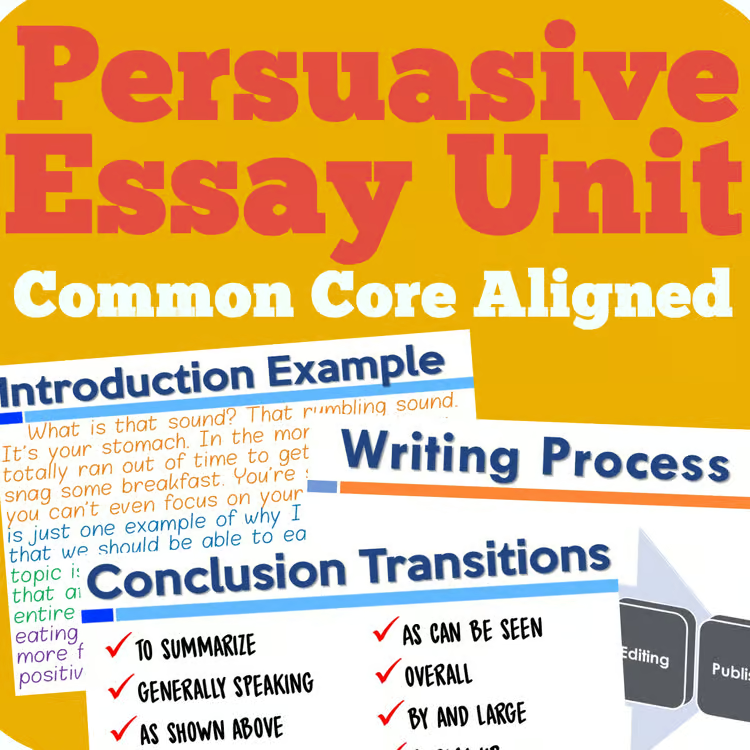
If you want to see a room full of middle schoolers instantly freeze up, just walk up to the whiteboard and write the phrase: We are starting our research paper today.
The transition from creative storytelling or simple summarizing to structured argument writing is notoriously one of the steepest climbs of the entire school year. It requires a completely different cognitive skill set—one that demands cold logic, bulletproof organization, and the rare ability to look at an issue from multiple perspectives.
When we simply tell students to “write a persuasive essay,” they often panic. They either dump all their thoughts into one massive, endless paragraph, or they write a highly emotional rant backed by their favorite argument: “Because it’s just common sense!”
Teaching scaffolded argumentative writing isn’t about giving them a blank prompt and hoping for the best. It’s about handing them a clear, predictable blueprint for every single section of the essay so they can focus on their ideas instead of staring at a blinking cursor. Here are three ways to break down the persuasive writing process and turn your students into master debaters.
Why Scaffolded Argumentative Writing is the Key to ELA Success
When students feel overwhelmed by a large writing task, their default defense mechanism is avoidance. If they don’t know how to write an introduction, they won’t even try to write the body.
By breaking the writing cycle into structured, bite-sized phases, you lower the cognitive load and show them that a strong argument is built one piece at a time.
1. Start with Deconstruction, Not Production
Before a student can build a house, they need to see what a finished house looks like. Never skip the mentor text phase.
Give the entire class a high-quality, student-accessible mentor essay to read, rip apart, and critique. Don’t just look at what the author said—analyze how they said it. Have your students color-code the thesis statement, highlight the transition words, and physically underline where the writer introduces a counterclaim. When they see a real blueprint in action, their own drafting phase becomes infinitely less intimidating.
2. Demystify the Counterclaim and Rebuttal
The trickiest part of CCSS W.6.1 standards for middle schoolers is the counterclaim. Their natural instinct is to pretend the opposing side doesn’t exist. They worry that mentioning a counterargument will ruin their own point.
We need to teach them that addressing the opposition actually makes their essay stronger. Frame it as a strategic chess move:
- The Counterclaim: “Some people might argue that school uniforms save families money…”
- The Rebuttal (The Trap): “However, statistics show that uniform requirements actually increase overall spending…”
When you teach them to treat the counterclaim as an opportunity for a clever rebuttal, they stop ignoring the other side and start outsmarting it.
3. Deploy Structured Peer-Editing Checklists
The revision phase can quickly devolve into students trading papers, fixing a single lowercase letter, writing “Good job!” at the top, and handing it back. That isn’t editing; that’s a polite exchange of papers.
To make peer editing meaningful, give them highly specific, action-oriented checklists. Instead of asking, “Is this paragraph good?” ask them to check off boxes like: “Circle the transition word at the start of body paragraph two” or “Underline the quote that acts as the primary piece of evidence.” If the peer editor can’t find it, the writer knows exactly what they need to fix.
The Power of the Step-by-Step Approach
At the end of the day, teaching students how to build an argument isn’t a race to a final draft. It’s a slow, deliberate exercise in logical thinking. When we slow down, pull back the curtain on mentor texts, and tackle each piece of the essay frame by frame, the overwhelming mountain of an essay suddenly turns into a series of manageable, satisfying steps. Watching a hesitant writer realize that they can successfully out-reason their opponent with clear facts is one of the most rewarding moments in secondary ELA.


Leave a Reply