
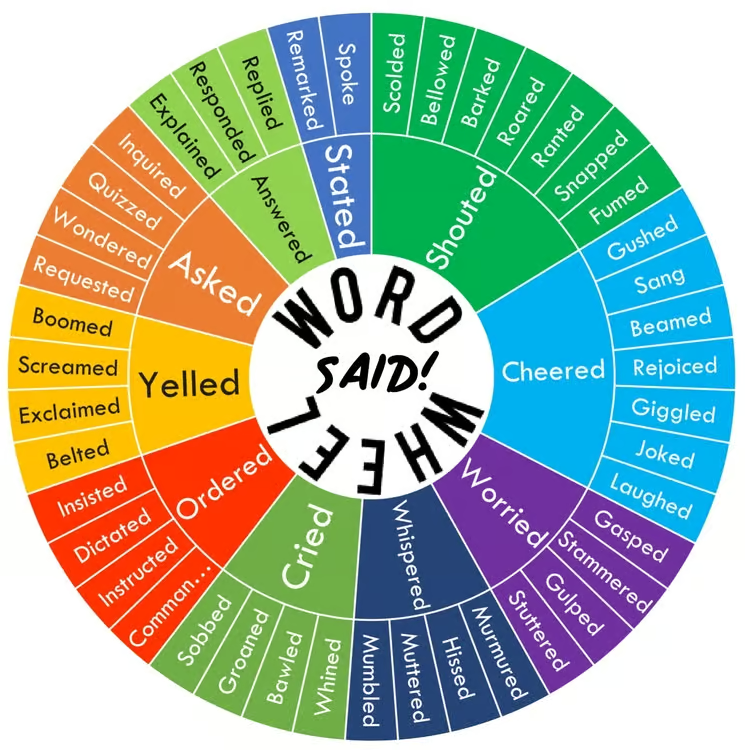
Imagine reading a book where every character only ever “said” things. “Pass the salt,” he said. “I’m going to the moon,” she said. “Watch out for that giant robot!” they said. It’s a bit flat, isn’t it? While “said” is a useful, invisible word, overusing it is a missed opportunity to show your reader exactly how a character is feeling.
In the world of creative writing, we often say “Said is Dead.” This doesn’t mean you can never use it, but it encourages writers to find more descriptive “dialogue tags” that paint a clearer picture. By swapping out one simple word, you can turn a boring sentence into a vivid scene.
1. When the Volume Goes Up (Loud & Angry)
If a character is excited, angry, or across a crowded room, “said” just won’t cut it. You need words that carry weight and volume.
- The Loud List: Bellowed, boomed, roared, screamed, yelled, or shouted.
- The Angry List: Snapped, fumed, ranted, or scolded.
- Example: Instead of “Get out!” he said, try “Get out!” he bellowed.
2. When the Volume Goes Down (Soft & Sad)
Sometimes the most powerful moments in a story happen in a whisper or through tears. These words help convey intimacy or heartbreak.
- The Soft List: Whispered, muttered, murmured, or mumbled.
- The Sad List: Sobbed, groaned, whined, or bawled.
- Example: “I’m sorry,” she murmured, her voice barely audible.
3. Sharing News and Info (Stated & Replied)
When a character is giving a speech, answering a question, or providing facts, you can use words that sound more official or direct.
- The Info List: Explained, remarked, stated, or spoke.
- The Response List: Replied, responded, or answered.
- Example: “The experiment is a success,” the scientist stated confidently.
4. Expressing Joy and Humor (Happy)
If your character is having the time of their life, their dialogue tags should reflect that energy!
- The Happy List: Giggled, joked, cheered, rejoiced, or beamed.
- Example: “We won!” the team cheered in unison.
5. Asking and Commanding (Inquired & Ordered)
Specific actions deserve specific words. Are they curious, or are they in charge?
- Curiosity: Inquired, quizzed, requested, or wondered.
- Authority: Ordered, commanded, insisted, or dictated.
Pro-Tip: The “Tone Check”
Before you pick a replacement for “said,” ask yourself: What is my character’s emotion right now? * If they are scared, they might stammer or gasp.
- If they are being sneaky, they might hiss.
- If they are unsure, they might gulp.
The right word doesn’t just tell the reader what was spoken; it tells them how it was spoken and why it matters.
Level Up Your Narrative
Choosing better dialogue tags is one of the fastest ways to move from a “beginner” writer to a “storyteller.” By using a variety of synonyms, you provide your readers with a performance rather than just a transcript. So, the next time you reach for the word “said,” take a moment to look at your character’s heart and choose a word that truly speaks for them.


Leave a Reply